
 (EUR)
(EUR)


Electro Conductive Wheels
-
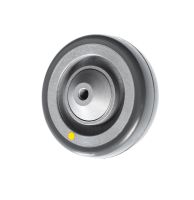
Electro Conductive Rubber Wheels
From £10.13 £8.44
Designed to safely dissipate static electricity, these wheels are crafted from electro-conductive rubber, which helps to reduce vibration compared to harder materials like nylon or polyurethane. Typically fitted onto equipment where static build-up is a concern, they provide additional grip and protect sensitive components by grounding excess charge. Ensure compatibility with your existing fittings before ordering to achieve optimal performance.
-

Electro Conductive Rubber Wheels with Stainless Steel Bearings
From £13.32 £11.10
These wheels are designed to conduct electricity through their rubber composition, reducing static build-up in sensitive environments. They feature stainless steel bearings that provide smooth rotation and longevity. The rubber material offers additional grip and helps in minimising vibrations during use. When ordering, ensure compatibility with your existing equipment's fittings to guarantee proper installation.

How to measure your Castors
1. Measure the Wheel Diameter – the bigger the wheel the easier it is to move!
2. Choose the Castor Type - either Top Plate, Bolt Hole or Threaded Stem.
This is all about how you want to fix your castor to your unit, and how much weight each castor is expected to carry.
3. Fixing Dimensions
Measure your top plate dimensions, in order to match any replacement castors. Alternatively measure your bolt dimesions or your threaded stem size. Also measure your fixing bolt size (D1) as we can supply fixing bolts and nuts. In order to measure thread size, simply measure the diameter of the thread, 8mm diameter equates to an M8 thread.
Top Plate Castors are fixed to your unit by 4 fixing bolts per castor, supplied sepeartely. Bolt Hole castors can attach either by using a threaded bolt or a tubular adaptor. Threaded Stem Castors are supplied with a stem that can screw into your equpment.
Top Tip! Attaching castors into round and square tube can be achieved by using bolt hole castors and castor tube adaptors.
We have a variety of sizes both in the round and square tubular expanding adaptor fittings and these can be found on our Accessories page. In order to choose the correct adaptor for your hollow tube, please follow the following steps
- Is your hollow tubular leg round or square?
- Measure the internal diameter of your hollow tube
- Choose the expander fitting with the range of internal diameters to suit your tube.
| Round Expander To Suit Internal Diam. RangeItem Code | Item Code |
| 18mm - 19.5mm | R-18 |
| 19.5mm - 21.7mm | R-20 |
| 21.7mm - 24.5mm | R-22 |
| 24.5mm - 27mm | R-25 |
| 27mm - 29.5mm | R-27 |
| 29.5mm - 32mm | R-30 |
| Square Expander To Suit Internal Diam. Range | Item Code |
| 20mm -22mm | S-20 |
| 22mm - 25mm | S-22 |
| 25mm - 28mm | S-25 |
| 29mm - 32mm | S-29 |
| 36mm - 38mm | S-36 |
4. Choose your Wheel material
Top Tip! General rule of thumb is soft wheels on hard floors and hard wheels on soft floor surfaces. Soft wheels are rubber, and hard wheels are nylon and polyurethane. Pneumatics and puncture proof wheels are ideal for outdoor applications. For more information on wheels, take a look at our Wheel Measurement Section.
5. Castor Configuration -Swivel, Fixed or Braked Castors
Swivel
Swivel with Brake
Fixed
Bolt Hole Castors - are available as a swivel and swivel with brake versions only
Swivel
Swivel with Brake
Top Tip! The following configurations are the most popular
- Four Swivel Castors - for the maximum manoeuvrability, but may be difficult to control on a straight run and not ideal for very heavy loads.
- Two Swivel Castors and Two Fixed Castors - the most popular configuration as it provides the best control coupled with manoeuvrability.
- Two Swivel Castors with Brakes and Two Fixed Castors- again the most popular option as it gives good control and manoeuvrability, and allows the items to be locked into a specific location as required.
6. Check the Load Capacities – for a 4 castor trolley
Having an understanding of the weight you want the castors to support and move is a vital consideration! Use the following calculation
Max Load each castor needs to carry = (unit weight + max extra load) ÷3
Top tip! Dividing your total load by 3 allows for a margin of safety, and this will give you the maximum each castor can carry in a safe working environment, allowing for uneven floor surfaces.
7 . Other Considerations that may affect your choice?
Swivel Radius - The distance from the centre of the castor head fitting to the outside of the wheel. This measurement enables you to ensure you have enough clearance for the complete castor to rotate, without being fouled. It is important to take this into consideration when deciding where to attach the castor. Please note braked castors have slightly larger swivel radiuses, as a result of the foot brake mechanisms.
Floor Surfaces - All our stated load ratings for our castor ranges are based upon the assumption that the floor surface is reasonably level. Any obstructions, ridges, cracks or dirt will affect the load rating and efficiency of the castors. Careful consideration of Wheel Type in your castors is important and discussed in more detail below.
Health & Safety - All our castors are designed for low speed applications, and power towing castors are available upon special request. It is important to select the right castor for the job, to protect against manual handling injuries.
Bearings - Choosing castors and wheels with bearings, makes them easier to move, however in certain outdoor and offshore environments standard bearings may cease. Call us for information on stainless steel bearings.
Temperature - We offer a specialist range of Temperature Resistant castors that can withstand high temperatures in ovens, kilns and foundries. These castors can also withstand low temperatures such as in freezers and outdoor environments.
How to Measure Wheels
Choosing the right wheels applies to your castor selection and also if you just want to purchase any of our wheels. Choosing the right wheel for the job can make such a difference. To simplify your wheel selection we have highlighted a number of factors for you to consider
1. Wheel Diameter – the larger the wheel the easier it is to move and the more weight it can carry. Measure the diameter of the wheel from outside edge to outside edge.
2. Hub Bore – is the diameter of the hole at the centre of the wheel is an important measurement. To double check you can measure the diameter of your axle and the measurements should be the same. This does vary in different wheels and the hub bore can be reduced to suit your application with the addition of bearings, or collars and tubes. Please have a look at our accessories page for more information on reducing the hub bore diameter.
3. Wheel Load Capacity – all of our wheels have been tested and are able to carry the specified load capacities. Look for the symbol. Weight bearing abilities can be affected by floor surfaces and amount of use overtime. Overloading wheels will cause them to fail!
4. Tread Width – is the width of the wheel that touches the floor surface. Different types of wheel have differing tread widths. Wide tread wheels are ideal for outdoor environments.
5. Hub Length – this is the width of the hub bore , and can be measured as the width of the centre of the wheel. Getting the right hub length is important, because if you purchase a wheel with the hub bore being too small the wheel will wobble on the axle. If the hub length is too big it won’t fit onto your axle. All our wheels that fit our castors are designed to suit and delivered ready assembled to you, so you don’t have to worry!
6. Wheel Type – Wheels can be simply categorised into 2 types, soft tread wheels and hard tread wheels. The general principle is hard tread wheels on softer floor surfaces, and soft tread wheels on harder floor surfaces. This principle reduces the rolling tractive resistance and makes the wheels easier to move.
7. Hard Tread Wheels – such as Nylon Wheels, Polypropylene Wheels, Phenolic High Temperature Wheels and Cast Iron Wheels are easiest to manoeuvre, as they have a lower rolling resistance against the floor surface. They are durable, strong and long lasting, depending upon their application. They can at times be considered to be noisy and can damage some floor surfaces. But these hard tread wheels remain our best sellers for every day applications.
8. Soft Tread Wheels – such as Solid Rubber Wheels, Pneumatic Rubber Wheels, High Temperature Rubber Wheels and Polyurethane Wheels. Soft Tread Wheels are generally kinder to the floor surfaces, make less noise and some are even non marking rubber wheels. Polyurethane wheels tend to sit in-between the two types of wheels, as they have a hard nylon, cast iron or aluminium centre with a softer polyurethane tyre bonded on. This makes the polyurethane wheels some of the most versatile wheels in the range.
9. High Temperature Wheels – we offer a range of hard tread phenolic resin temperature resistant wheels along with a soft tread high temperature rubber wheels.
10. Bearings – there are a number of bearings to choose from depending upon your wheel type, load ratings and application.
Plain Bearings – Wheels with no bearings
Roller Bearings – A bearing collar containing needle roller bearings, often the most common and well used bearings. Most suitable for medium duty applications, making the wheel easier to move.
Ball Journal Bearings & Tapered Roller Bearings – precision bearings, for heavier load applications
Stainless Steel Bearings – are also available for outdoor environments and food manufacturing plants.
How to Measure Wheelbarrow Wheels
If you find yourself in a situation where your wheelbarrow wheels or trolley wheels are suffering from corrosion or perhaps have picked up a puncture along the way, then there are cheaper solutions than simply replacing the wheelbarrow. Replacing the wheelbarrow wheel or finding a puncture proof replacement are much simpler and cost effective solutions. But it's not always easy finding the exact replacement wheel that is going to work for your situation.
That's why we've put together this quick and easy guide to choosing the right wheelbarrow wheels or trolley wheels for your situation, saving you both time and money. Simply walk through this list of key measurements noting down the measurements at each stage and then use those measurements when browsing the Ross Castors range of wheels. If you get stuck at any point or need some expert advice for your situation you can call us on 0116 276 4987.
Overall Diameter of the Wheel
What is the overall diameter of the wheel? (From outside edge to outside edge)
Diameter of the Hub Bore
The hole in the middle of the wheel, the Hub Bore, what diameter is this?
The Hub Length
What is the hub length?
This measurementis the width of the hole running through the centre of the wheel. Handy Tip! Stick your pencil through the hole in the middle of the wheel and measure how far it goes through!
Bearings or No Bearings?
We can offer you wheelbarrow wheels and trolley wheels with or without bearings, with plastic wheel centres or metal, and even a range of puncture proof wheels to suit your requirements.
Ross Castors is a leading supplier of wheelbarrow wheels, trolley wheels, pneumatic wheels and an extensive range of other wheels to suit your situation. With 10,000's of products in stock, we strive to deliver on our promise of next day delivery giving you the certainty and confidence to get on with the job. Backed by over 40 years experience in the castors and wheels industry, we have developed an extensive range of products to suit your requirements and become a one stop shop for many customers. For expert advice and customer service, call us on 0116 276 4987.
How to measure Tube Inserts, Treaded Inserts, Plastic Caps and Ferrules
Our tube fittings measurements are based on 2 key factors.
1. External Tube Diameter - Measure the EXTERNAL DIAMETER of your tube
2. Tube wall thickness - Measure Tube wall thickness = Outside Diameter – Internal Diameter
All our range of round inserts, square tube caps and rectangular inserts are designed to fit flush with your hollow tube. Each insert has side fins that will retract to ensure a tight snug fit. For popular sizes we can offer plastic inserts to suit varying tube wall thicknesses.
Tube wall thicknesses can sometimes be described as a Gauge . The following Gauge table indicates the tube wall thickness and corresponding gauge number.
| Tube Wall Thickness | Gauge |
| 0.91mm | 20 |
| 1.01mm | 19 |
| 1.21mm | 18 |
| 1.42mm | 17 |
| 1.62mm | 16 |
| 1.82mm | 15 |
| 2.03mm | 14 |
| 2.33mm | 13 |
| 2.64mm | 12 |
| 2.94mm | 11 |
| 3.25mm | 10 |
| 3.65mm | 9 |
| 4.06mm | 8 |
| 4.47mm | 7 |
| 4.87mm | 6 |
| 5.38mm | 5 |
| 5.89mm | 4 |
So if you can measure your external tube diameter dimensions and have your tube wall thickness, we can offer you a plastic insert and plastic caps to suit your application.
The same dimensions are required for our rod and wire end tips, plastic ferrules, rubber ferrules and rubber bungs. Bolt and Nut Caps are measured on the thread diameter, which equates to a standard hexagonal head size. Threaded tube inserts measurements are the same principal as blanking plugs, which are external tube diameter and tube wall thickness.
We offer a range of imperial and metric sizes of tube fittings, so if you are unsure of your size, measure as best you can and we will offer you the nearest options for you.
If you would like a free sample of our tube fittings to test, please contact us and we would be happy to arrange this for you
How to choose the correct Adjustable Feet, Levelling Feet and Conveyor Feet?
Adjustable Feet
Adjustable levelling feet, tilting levelling feet and conveyor feet are a range of height adjusters that are available with a variety of base diameters and thread sizes and lengths. We can offer large ranges of rigid feet, tilting feet, stainless steel feet and conveyor feet with zinc plated threads or stainless steel threads.
3 Key Levelling Feet Measurements
1. Base Diameter
2. Thread Size ( M6,M8,M10,M12,M16 )
3. Thread Length
For easy attachment adjustable feet can be treaded into a range of metal components, threaded inserts or threaded weld on plates. We also offer side mounting brackets for rigid feet with extra-long threaded adjustable feet.
Threaded Metal Components – we offer a range of Weld on Nuts, Tee Nuts and Threaded wood inserts, which are ideal for M6, M8 and M10 adjustable feet. Just match up the thread size with the metal component. Tee Nuts and Wood Inserts are ideally used on MDF and solid wood. Pilot holes would need to be drilled for the wood insert.
Threaded Inserts - Threaded Inserts are the ideal way to attach height adjusters, conveyor feet and levelling feet into hollow tubular legs. In order to match the correct threaded insert with the correct adjustable foot, just match the thread sizes, either M6, M8,M10, M12 & M16. We offer a range of round, square and rectangular economy and heavy duty styles.
Stainless Steel Weld on Plates – are ideal for stainless steel conveyor feet and are offered in a range of thread sizes and diameters.
How to Measure Hand wheels, Thumbscrews, Ballknobs and T Grips
There are 2 key measurements you need to check?
- 1. Is it Male or Female Thread
- 2. What’s the Thread Size ( M5, M6, M8, M10, M12, M16 )
Male or Female Thread
Handwheels, Thumb Screws, T Grips and clamping handles are chosen by weather they have a male or female thread.
Male Thread
Female Thread
Thread Size
Our Handwheels, Thumb Screws, T Grips and clamping handles come with a range of thread diameters from M5 up to M16.
How to choose the correct Handgrips?
In order to choose the correct handgrip, it is important to measure the external diameter of the tube or handlebar the grip is going onto. We offer handgrips from 12.5mm ( ½”) up to 32mm (1.1/4”). As a check you could measure the internal diameter of the handgrip and the two measurements should be the same. We offer economy up to heavy duty handgrips, and one of the most popular styles in the natural rubber handgrip version.
Handle Grip
Choosing the Right Kenda Tyre
What weight do you need your Kenda tyres to carry, and at what top speed?
The Kenda range uses a code system to help you to identify which tyres are right for your needs. Each tyre has a number that tells you what weight it can support, and a letter that tells you the maximum speed that the tyre can move at when carrying that weight.
Below are two tables that show the maximum loads and maximum speeds of the Kenda tyre range. You will find these codes in the product descriptions. Use the below tables to determine the load/speed rating of that particular tyre.
For example, 30C would be a tyre that can carry 106kg at a maximum speed of 60kmph/37mph.
Electro Conductive Wheels
Electro Conductive Wheels are essential for preventing static build-up in sensitive environments.
About Electro Conductive Wheels
Electro Conductive Wheels are designed to dissipate static electricity safely by allowing electrical charges to pass through the wheel material to the ground. This is achieved by integrating conductive materials into the wheel's composition, which typically includes rubber or polyurethane enhanced with carbon or other conductive additives. The conductive properties help maintain safety and protect sensitive electronic equipment from static discharge.
These wheels are commonly used in environments where static electricity could damage sensitive equipment or ignite flammable materials, such as in electronics manufacturing, cleanrooms, and laboratories. They are also prevalent in environments requiring strict static control, like data centres and semiconductor facilities.
When selecting Electro Conductive Wheels, it is crucial to consider the load capacity and the type of flooring they will be used on, as these factors can affect the wheel's performance and longevity.
Key Features & Applications
- Static electricity dissipation
- Used in electronics manufacturing
- Suitable for cleanroom environments
- Essential in data centres
- Protects sensitive equipment from static
- Common in semiconductor facilities
Frequently Asked Questions
What materials are used in Electro Conductive Wheels?
Electro Conductive Wheels are typically made from rubber or polyurethane that is enhanced with conductive materials such as carbon. These additives allow the wheel to conduct electricity, safely dissipating static charges to prevent build-up. The choice of material affects the wheel's durability and suitability for different environments.
How do I choose the right size of Electro Conductive Wheels?
Choosing the correct size for Electro Conductive Wheels involves considering the load they need to carry and the type of surface they will be used on. Larger wheels can handle heavier loads and move more easily over uneven surfaces, while smaller wheels may be suitable for lighter loads and smooth surfaces. Always ensure the wheel size matches the equipment specifications for optimal performance.
Are Electro Conductive Wheels suitable for all types of flooring?
Electro Conductive Wheels are suitable for many types of flooring, but it's important to match the wheel material to the floor surface to avoid damage and ensure effective static dissipation. For instance, softer rubber wheels may be better for hard surfaces, while harder materials like polyurethane may be suitable for softer or more delicate floors. Always consider the specific requirements of your environment when selecting wheels.
